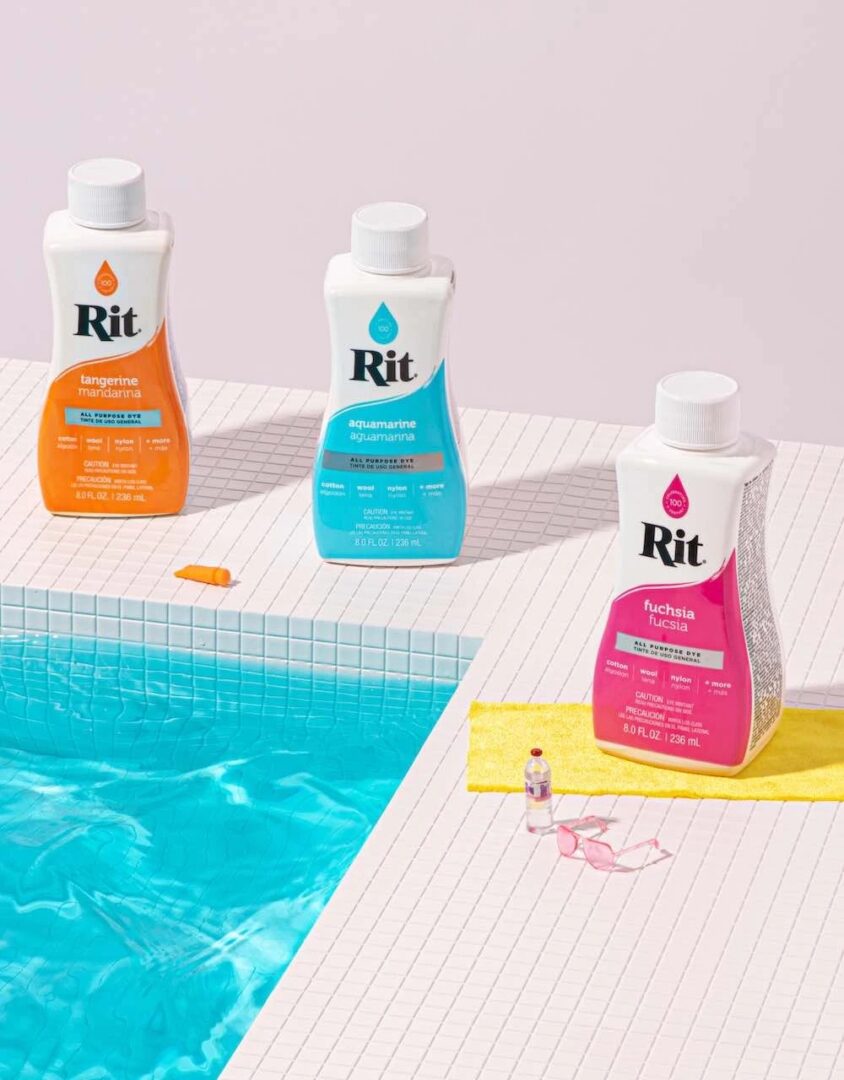
How to Dye Natural Fabrics
When dyeing natural fabrics (cotton, linen, silk, wool or ramie), use Rit All-Purpose Dye.

Important Notes
Synthetic Blends
If your garment contains more than 35% synthetic material (such as polyester, acrylic or acetate), then see our page for dyeing synthetic fabrics with Rit DyeMore Synthetic fiber dye instead.
Color
If the garment you are dyeing is white or off white, then you should be able to achieve true color. If the garment has an existing color, then please review our instructions on how to change the color of a garment.
Patterns and Logos
If the garment you are dyeing has a pattern or logo, the color you use will mix with the existing color(s) in the fabric and create new colors. To learn more about this, please review our instructions on overdyeing patterns and logos.
Bleach Stains and Sun Damage
Sun and bleach actually damage fabric, making it very difficult to dye. If you still want to try and dye a garment with bleach or sun damage, you could try using Rit Color Remover on the garment before dyeing. Unfortunately we cannot guarantee this will work.
Select Your Method
For general dye projects, use the sink or bucket method.
If you are looking to achieve as vibrant a color as possible (or dyeing nylon), use the stovetop method.
If you want to dye large items or are looking for the easiest dye method, then use the washing machine method.